Monday, 30 January 2012
TOWTON 2012 - A DATE FOR YOUR DIARY
Hope to be attending a book signing at this event too - should be a great day out!


Monday, 16 January 2012
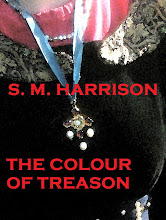
New Book Trailer for The Colour of Treason - Wars of the Roses Novel
The Colour of Treason is a medieval tale of love, loss, betrayal and ambition. One woman is many things...
Available from:
Lulu:
http://www.lulu.com/product/paperback/the-colour-of-treason/18734781
Amazon:
http://www.amazon.co.uk/The-Colour-of-Treason-ebook/dp/B006NPRI56
Sunday, 20 November 2011
Author's Notes in HF

Something I had never really thought of before or during the writing of the WsIP were author's notes. But now I'm getting near(er) the end of the first book I guess I should be! Seemingly peculiar to HF the author's note is where you get the chance to separate fact from fiction; justify any controversial choices you've made and point out some extra biographical notes that could not be shoe-horned into the narrative. At least that's what I think they are!
Interestingly some authors don't have them at all - Ken Follett's 'Pillars of the Earth' for example. While others give extensive historical detail and highlight anything they've had to compromise on or change - Bernard Cornwell includes them in each of his novels.
I was of the opinion that less is more; that I could end up writing a new textbook on the WoTR if I'm not careful and they are currently 3 pages long and counting - but that's because I got talking about the Earl of Warwick...again!
Saturday, 5 November 2011
How many drafts is enough?

As you know the WIP is now Ws IP! Two volumes: one ~240k and one ~200k words, but at least I feel like I'm getting somewhere now! During a recent discussion with a writing buddy I wondered how many drafts I'd gone through - now that 'the end' is in sight (my sis tells me too many and to get them out there!), but an article in the December issue of Writing magazine with writer and publisher Stewart Ferris says that is one of the commonest mistakes writers make - sending their pride and joy out into the world way too soon! He says that it shouldn't leave the nest until Draft 10! He lists what each draft is for: tightening the structure; character development; improving the dialogue; language and imagery; restructuring; adding conflict; improving the crucial opening pages; more character development and final proofreading! It confirms what I have found in my journey - that I can only concentrate on one or two aspects as I rework the novels - oh and that's another thing - there aren't writers - only rewriters which is what I feel like at the moment!
Monday, 18 April 2011
550th Anniversary of the Battle of Towton

I wanted to write something profound; something moving and memorable in recognition of the great loss of life that unfolded as Edward erstwhile Earl of March took the crown of England. But in the end I think much has been said, particularly in recent months, thanks to the wonderful efforts of the Towton Battlefield Society putting our battlefield among the news headlines - even making the hallowed ground of Radio 4!


I think the 28,000 would have approved of the wonderful event on Sunday in which they were honoured and remembered by over 3,000 people in glorious sunshine - so much in contrast to the actual day of the battle - but no less poignant for it. And it was a real honour to meet the TBS patron, the eloquent Robert Hardy CBE, who gave voice to the thoughts of many who paid their respects and showed his love of and interest in all things mediaeval as he toured the site talking with re-enactors and public alike.

It was a great day and a wonderful tribute - what can we do for the 551st?


Sunday, 21 November 2010
Birthday Greetings for The Kingmaker!

Richard Neville, the future Earl of Warwick was born on 22nd November 1428 and was knighted by Henry VI slightly before his 18th birthday, possibly at the Coronation of Queen Marguerite. To paraphrase Pollard, his contemporaries saw him as a great European prince, and during his meteoric career he dazzled the courts of northern Europe with his power and flamboyance. Commynes called him a 'prince' and saw him on the same level as other rulers he knew including kings Louis XI of France and Edward IV of England. And to other contemporaries he was known as the Third King. There was simply nothing he could not achieve and once established in Calais a comparison with the Valois dukes is not out of place; his household was almost a separate court at which he gave feasts which outstripped those of his monarch, the most sumptuous feast recorded being that of his brother Archbishop Neville's inauguration in 1466 as Archbishop of York at Cawood Castle. And Warwick acted as though he was a head of state within a state certainly he never saw himself as merely a subject of Edward IV; he was not dependent on the dynasty; he rather believed the opposite was true and for a long time he was right. He even imagined life without Edward and when Edward begged to differ, the Lancastrian option was the logical next step. Thus he became a hero for those who stood against the further extension of the centralized state in the centuries that were to follow. As Pollard says; "He had the temerity to put himself on a par with kings and to outshine them". With his exploits in battle on land and sea (whoever dared to sail The Narrow Sea against him were given short shrift) he struck fear into the hearts of his, and England's, enemies - and for the most part he stood for both when no one else could. And for this Shakespeare gives him the hero's part in Henry VI parts 2 and 3 in which the earl stands for true nobility; he had been ill-used by Edward and it was honourable to make amends! That sentiment would not be out of place in his contemporary Mallory's Arthurian legends. ...the most courageous and manliest knight living.
Monday, 13 September 2010
Friends and Enemies

As Jack is still involved in the border wars I've been looking at the Scottish aspect of the WoTR. The Scots seemed to have chosen either York or Lancaster too - the disaffected Earl of Douglas working for York via the Earl of Warwick and the Earl of Angus choosing the House of Lancaster because of his Royal allegiance (James II had favoured Lancaster - though his Queen, Mary of Guelders favoured York!). In 1462 Angus received all the goods chattles and rents of the adherents of the forfeited Douglasses in Roxburghshire apart from those already owned by his brother William Douglas of Cluny. What might also have aided his allegience to Lancaster (apart from opposing the Douglasses in everything!) was that in the same year he entered into negotiations with Lancaster by whom he was promised 'to make the saide erle sufficiently and suerly after the lawes of England a duke withynne the saide reaume of England, with stile, astate honure and name of a duke'. The dukedom was to come with a castle and land to the value of 2000 marks. Angus fought with de Breze's French force to relieve Warwick's seige of Alnwick on 5th January 1463 but he died later that year without his English dukedom!

Subscribe to:
Posts (Atom)